

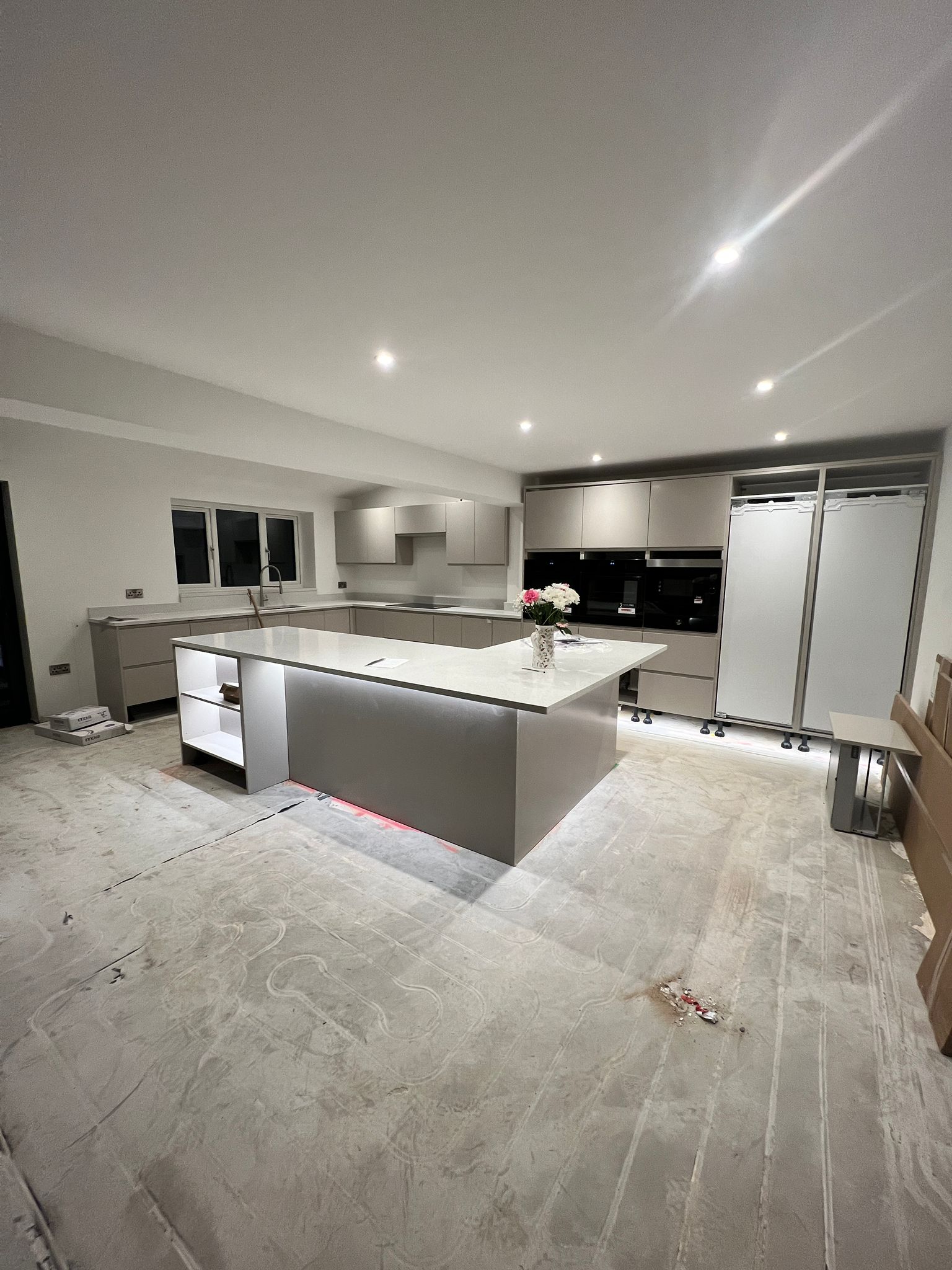
“Can we just knock this wall down?” It’s probably the question I get asked most frequently. The dream of a vast, light-filled kitchen-diner-living space is the gold standard of 2026 home design. But after years of knocking walls down, I’ve also started seeing a new trend: people wanting to put them back up.
Before you commit to a major structural change, I want to help you think through the reality of living in an “everything room.”
The “Acoustic” Nightmare
The one thing people forget about open-plan living is the noise. If someone is loading the dishwasher, someone else is watching the TV, and the kids are playing on the floor, the sound has nowhere to go. In a traditional house with doors, you have “acoustic privacy.” In an open-plan house, everyone is part of everyone else’s business.
If you have a young family, this can be great—you can keep an eye on the little ones while you’re prepping dinner. But as those kids become teenagers with their own music and loud gaming, you might find yourself wishing for a door to shut.
The “Smell” Factor
We all love the smell of a Sunday roast, but do you want your sofa and curtains to smell like it for the next three days? Without exceptionally high-powered extraction (which I always insist on installing for open-plan projects), cooking smells will migrate across the entire ground floor. When I design these spaces, I look at the “airflow” of the house to ensure your living area stays fresh even if you’re frying onions ten feet away.
The Rise of “Broken-Plan”
Lately, I’ve been steering more clients toward “Broken-Plan” living. This is the middle ground that I personally think works best for most British homes. Instead of removing the entire wall, we might:
- Install internal glass bifold doors or “Crittall-style” partitions. You get all the light and the visual connection, but you can physically close the room off when the TV is too loud.
- Use half-walls or “peninsula” kitchen units to create zones. It defines where the “work” ends and the “relaxing” begins.
- Incorporate different floor levels or materials. A change from oak flooring to a tiled kitchen area creates a psychological boundary without needing a physical wall.
The Structural Reality
From my perspective as a builder, knocking a wall down is rarely just “knocking a wall down.” Almost every internal wall in an older local house is doing some work, whether it’s supporting the floor joists above or bracing the external walls.
When we do an open-plan conversion at DM Property Services, we work closely with structural engineers to specify the right RSJ (steel beam). We also have to consider where your radiators, light switches, and plumbing are going to go once their “home” (the wall) is gone.
Open-plan is a fantastic way to modernise a home, but it requires a plan that goes beyond just aesthetics. It’s about how you live, how you cook, and how you find a bit of peace and quiet at the end of a long day.
The Heart of the Home: Planning a Kitchen Renovation That Lasts
I’ve spent half my career in kitchens, and I’ve learned one thing: a beautiful kitchen is useless if it doesn’t work. When clients ask me to “rip it all out and start again,” the first thing I do isn’t look at a colour palette; it’s look at their habits. A kitchen renovation is one of the biggest investments you’ll make in your property, and I want to ensure you aren’t just buying a showroom trend that feels dated by 2030.
The “Golden Triangle” and Beyond
We’ve all heard of the “work triangle” (the distance between your fridge, sink, and hob), but in 2026, the kitchen has to do more. It’s now a home office, a homework station, and a social hub. When I’m planning a layout, I think about “zoning.” We want the “chef” to have a clear path that doesn’t get crossed by someone trying to get to the kettle or the fridge. I often suggest “breakfast stations”—a dedicated cupboard for the toaster and coffee machine—to keep the main worktops clear of clutter.
Where to Spend and Where to Save
I’ll be honest with you: you don’t always need to spend £30,000 on cabinetry to get a high-end finish. At DM Property Services, I often advise clients to spend their budget on the “touch points.” Invest in a high-quality stone worktop and solid brass handles—these are the things you feel every single day. You can save money by using standard-sized carcass units and letting a skilled carpenter (like yours truly) fit them with precision. A cheap kitchen fitted perfectly will always look better than an expensive kitchen fitted poorly.
Lighting: The Secret Ingredient
Most people think about lighting last, but it should be first. I look at three layers: Task lighting (bright LEDs under cabinets so you can see what you’re chopping), Ambient lighting (pendants over an island for mood), and Feature lighting (LED strips in plinths or alcoves). If you don’t get the electrics right before the plastering starts, you’ll be left with a beautiful kitchen that feels “flat” the moment the sun goes down.
